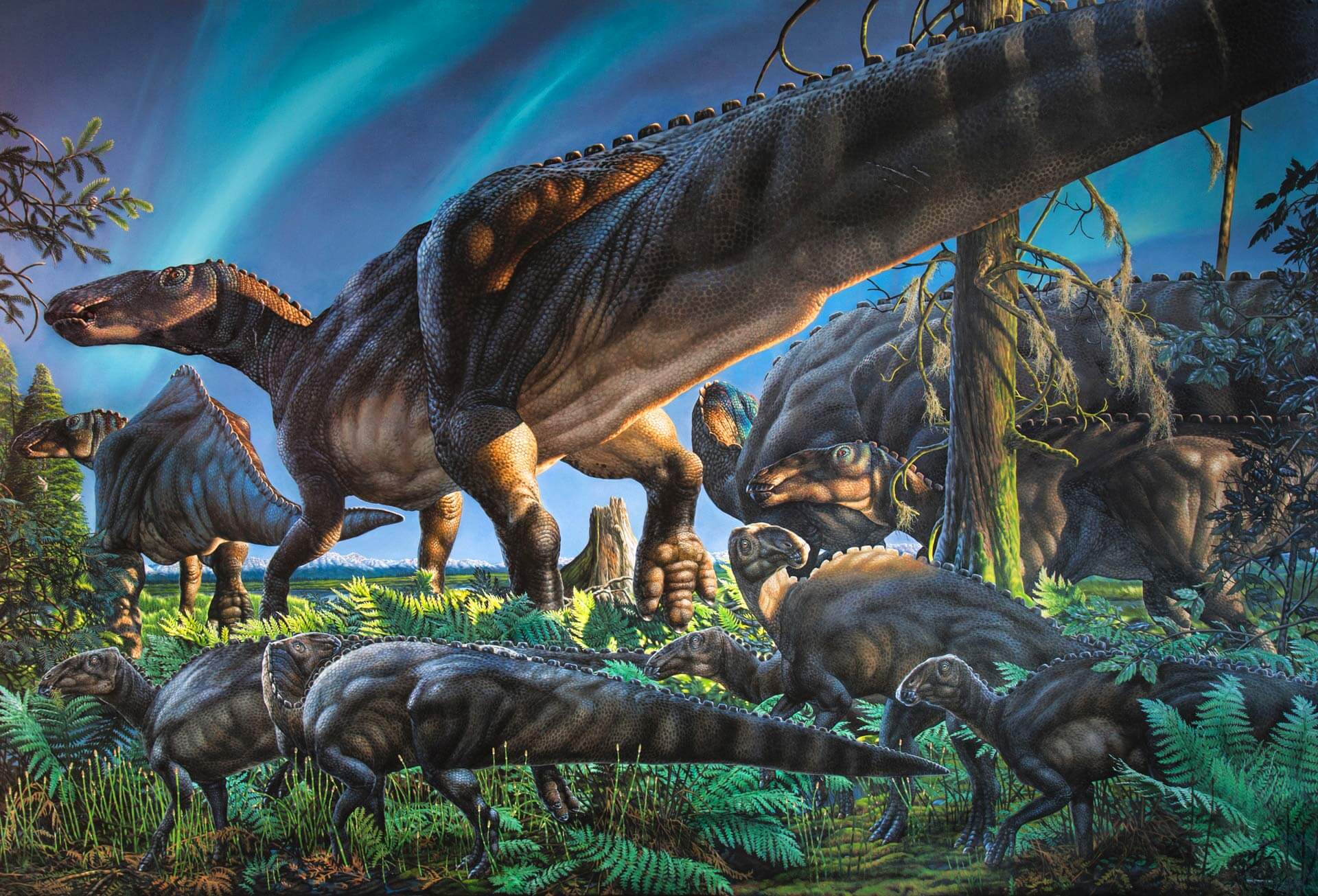
New Dinosaur Discovery: Ugrunaaluk kuukpikensis or, “Ancient Grazer”


image_3259_1e-Ugrunaaluk-kuukpikensisAn artist’s depiction of what paleontologists believe Ugrunaaluk kuukpikensis looked like. Image credit: James Havens.

Along the Colville River’s ancient sediments in the Liscomb Bone Bed (an area managed by BLM Alaska) lies a trove of fossils. Each field season, the BLM issues permits that allow qualified paleontologists and researchers to partake in limited surface collection and excavation in this area. This research adds to our understanding of Alaska’s distant past and how it relates to life elsewhere in the world long ago.

The curator of earth sciences for the University of Alaska Fairbanks Museum of the North, Patrick Druckenmiller, says “this is the best place in the world to find polar dinosaurs.” This is where researchers recently discovered the fossilized bones of the “ancient grazer,” Ungrunaaluk kuukpikensis (oo-GREW-naluck KOOK-pik-en-sis), Alaska’s newest hydrosaur and the fourth species unique to northern Alaska.

Erickson-5x3_referenceFlorida State University Researcher Greg Erickson works a fossil site in the Liscomb Bone Bed.

Scientists sought assistance from Native Iñupiaq speakers to name this newest duckbilled dinosaur species. “Ugru” means plant grinding, “Naluk” means respectfully old, and “Kuukpikensis” is the Inupiat name for the area along the Colville River.

Nearing the end of the Mesozoic Era’s Cretaceous Period (146- 65 million years ago) when U. Kuukpikensis lived, river systems crossed the ancient Arctic flood plain and vegetation thrived during the sunny summer season. These herbivorous polar dinosaurs likely roamed in herds and used their hundreds of grinding teeth to survive on coarse vegetation. They grew to 30-feet long.

Druckenmeyer says that “dinosaurs … living here in the Arctic were a completely different species from those who lived at the same time at lower latitudes… this suggests we had our own unique polar community up here.”

(Adapted from BLM Frontiers Newsletter Issue 125, Winter/Spring 2015/2016)


Kids Learn about Seabirds at Pribilof Summer Camps

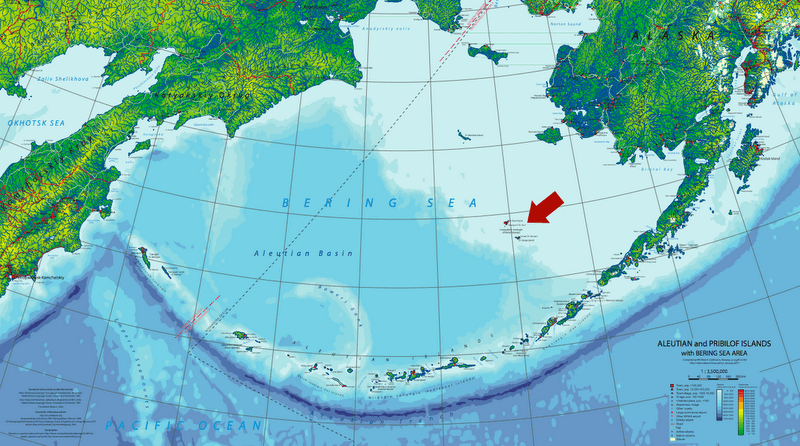
Do you know where the Pribilof Islands are?

Aleutian_Pribilof_Islands_map

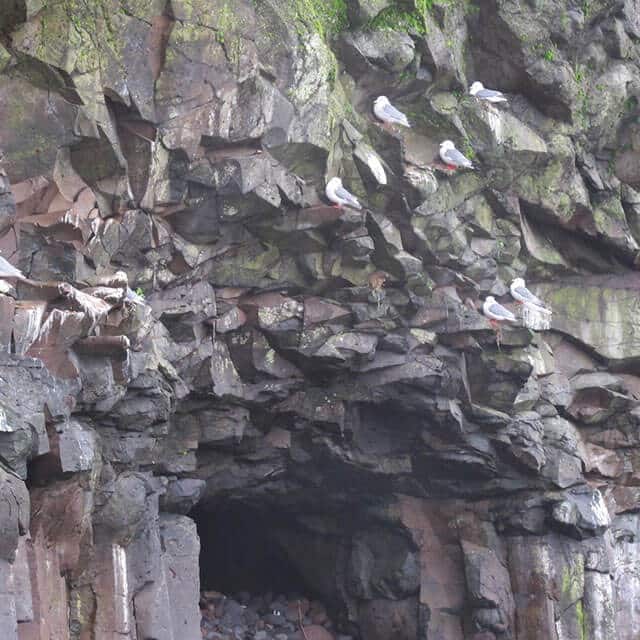
The Pribilof Islands are a group of four islands located off the coast of mainland Alaska in the Bering Sea – Saint Paul, Saint George, Otter Islet, and Walrus Islet. The islands have a combined population of about 600 people, with the population concentrated in the towns of St. Paul and St. George. The islands, which are part of the Alaska Maritime National Wildlife Refuge, are home to numerous wildlife species such as arctic blue fox and reindeer – and in the surrounding waters: fur seals, sea lions, several species of whales, and more. The islands are especially known for the important habitat they provide for nesting seabirds who enjoy the high cliff walls and plentiful rocky formations. It is estimated that two million seabirds nest on these islands annually!


birds in rocks on st george
In order to teach the youth of Pribilof Islands about the seabirds of their islands, Alaska Maritime National Wildlife Refuge works with the Pribilof School District and a range of other partners to coordinate the Seabird Youth Network, which hosts summer science camps for local youth. The Network was launched to open doors for youth to careers in science and natural resource management and to increase the students’ understanding of their local natural resources, as well as to build local capacity for the collection of seabird monitoring data on these special islands.

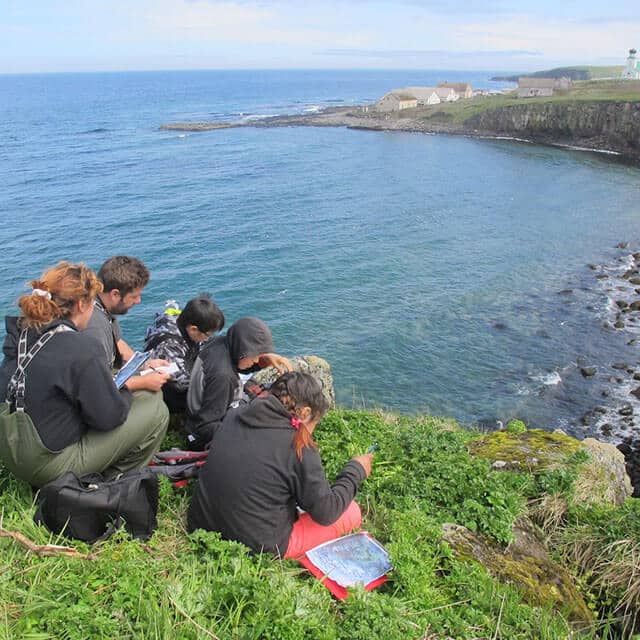
st.george camp 1
The Seabird Youth Network recently hosted the St. George Seabird Camp where students learned seabird biology basics and had the opportunity to assist with hands-on research efforts by helping to collect Least Auklet diet samples and by using GPS loggers to record where seabirds go to find their food. Overall the students gained a better understand of the Refuge’s long-term seabird monitoring program while having a lot of fun!

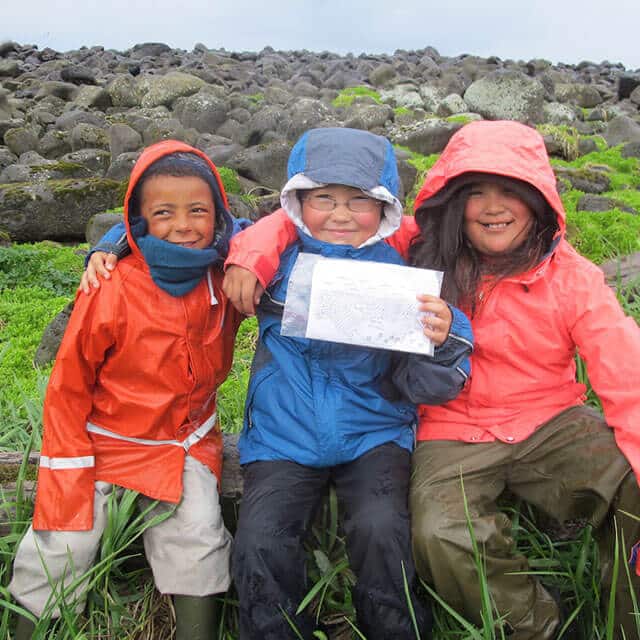
st. george camp 3
Currently, the St. Paul Seabird Camp is taking place. Students are attending wildlife photography workshops, writing letters and completing art projects to send to friends on nearby islands, and they’re learning Aleut language as well as the cultural use of seabirds through hands-on cooking lessons and a student-led theater production.

st paul island camp 1
The Seabird Youth Network website is updated with blog posts about these fun, educational camps! Check out the blog here: https://seabirdyouth.org/our-blog/

Check out the Seabird Youth Network on Facebook: https://www.facebook.com/Seabird-Youth-Network-392516100818794/?fref=ts

These camps are supported by the St. George Traditional Council, the Pribilof School District, the Alaska Maritime National Wildlife Refuge, the St. George Island Institute, the Aleut Community of St. Paul Island, St. Paul Tribal Government, City of St. Paul, Trident Seafood, the University of Alaska, Anchorage (UAA) research team, and the Tanadgusix Corporation, the National Park Service, and ConocoPhillips.

saint paul islands camp 2